In this section, students share personal insights, reflections, and behind-the-scenes experiences from their journey in the V4 programme. These blog-style articles offer a candid look into their academic and cultural adventures.
Author: Szymon Górkiewicz
New situations always bring both opportunities and challenges. The best example is given by history itself. Poland, from being one of the satellite countries, managed to fully gain its independence, while the Soviet Union was collapsing. The same thing can be said about Czechoslovakia becoming a state on the ruins of Austro-Hungarian Monarchy in 1918. On the other hand, Hungarian Revolution of 1956 only strengthened oppression and a foreign influence in the country. How then, should the Visegrad Region approach the contemporary problems and “Find its Own Way” in the modern world? This is what the conference, that took place on 6th December 2024 in Kraków, tried to address.
The conference consisted of 4 panels whose topics touched on some of the most important issues of the contemporary world that the Visegrad region needs to face. The presentations and discussions on topics such as security policy, populism, migration, and US-China competition gave us a unique insight into the problems and interesting debate over how we should approach it. During the conference, however, we not only had a chance to listen to the professionals, from the universities such us Jagiellonian University in Kraków, Matej Bel University in Banská Bystrica, University of West Bohemia in Pilsen, and University of Pécs who have been exploring those areas for years, but we also listened to the voice of students deeply interested in the topic. What is their opinion of the event then?
Attending the conference, even though it might be very stressful, is a great opportunity to get academic experience and learn many new things. Among the participants, who agree with that there are Fatima Karimli and Yaroslav Fedosov, our colleagues from the International Relations: Europe from Visegrad Perspective program. As Yaroslav said “always visiting a conference is about getting some new knowledge, sharing experience and information. It’s also about the networking and a nice opportunity to meet with students, professors and other colleagues.” Especially the last point might seem to be crucial for future academic careers. As Fatima aptly noted “sharing the same panel with experienced academic staff helped me establish meaningful contributions with them, get their feedback regarding my performance, and identify areas for improvement for future endeavors.” Based on those opinions, we can firmly state that it’s the
experience and the feedback that one gets is what is truly important and necessary for future development.
Knowing that participation in a conference is a very meaningful experience, what can we say about this one? What were the things that particularly caught the attention of us, students? According to Fatima “the idea of the panel’s organization was well-thought-out. Participants could gain perspectives from all four Visegrad countries, with an additional viewpoint provided by the performing students from outside these countries.” As we can see, the perspective, or rather a multitude of perspectives is something that the conference really paid attention to. A similar comment was made by Yaroslav who noticed “the diversity of the guests and the active participation of the students at the conference. I think this shows that there is interest in this topic and therefore there is potential for future meetings.” As the program celebrated its 10th years anniversary in 2023, we hope that we will be able to attend and be part of the next editions.
And what would be something that the students would like to see in the next editions? Some organizational changes? More panels? Some specific topics? For Yaroslav, it’s important to always adapt the topic to the needs of our dynamic world. At the same time, he mentions that “the topics of migration and security are topics that will be interesting for me at any time. I think it’s a big potential on discussion such topics nowadays.” A similar thing was expressed by Fatima who mentioned that she “would like to see more topics aligned with international peace and security and the Visegrad countries’ responses.” It clearly shows that the issue of security remains one of the most vital concerns that needs to be really focused on.
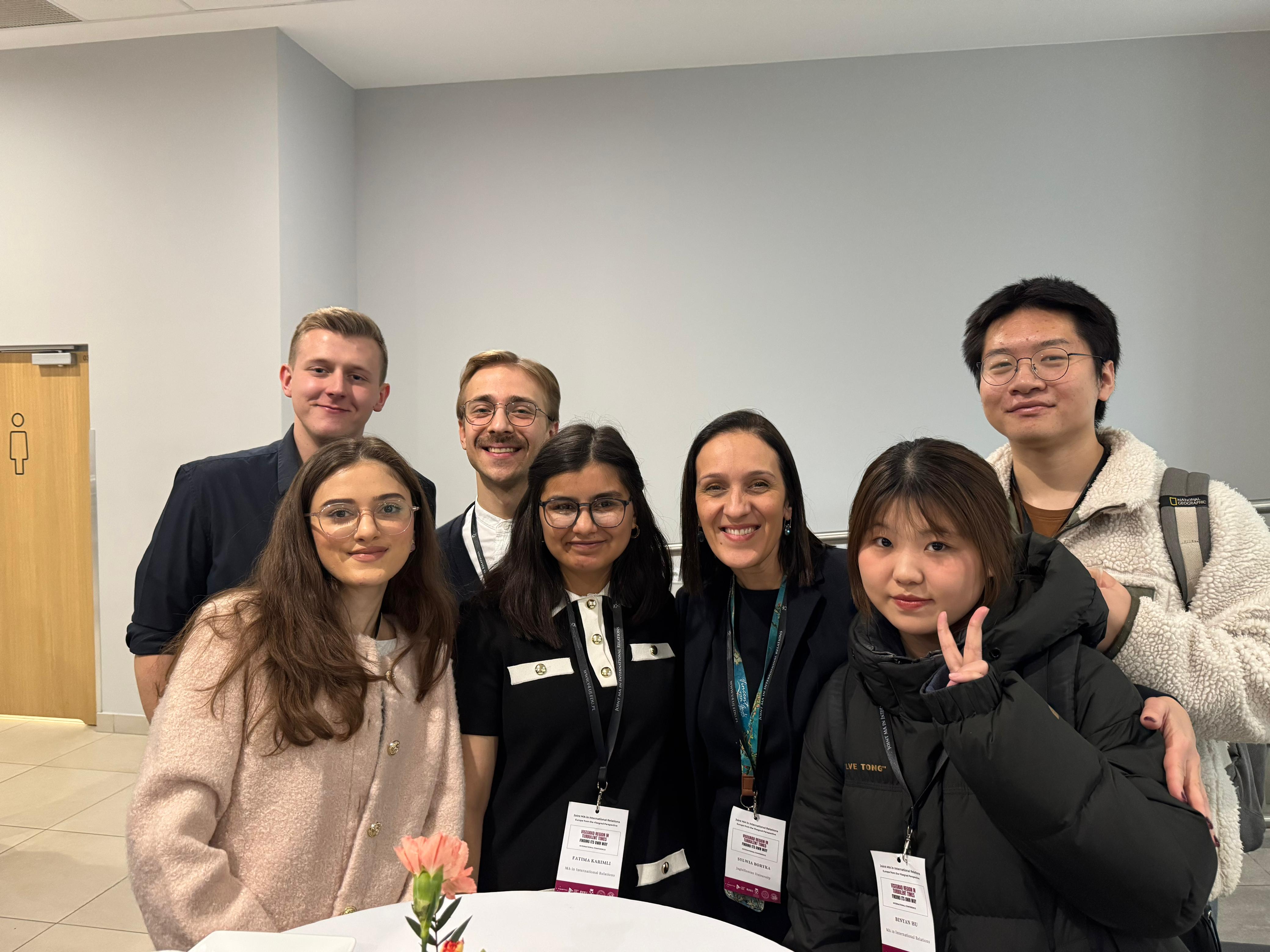
Finally, the place where the conference took place also needs to be mentioned. Kraków and the Jagiellonian University provide us with unique space where we can discuss, debate and argue over all the relevant topics. This, together with the conference itself was best sum up by Yaroslav: “Kraków was and still is a very close and favorite city for me. I am always happy to come here and the warmth and atmosphere with which I am always welcomed at the university is really unique. The emotions both from Krakow and from the conference are very positive. It is very pleasant to hear and see that there is interest in the topic of Visegrad cooperation, especially among students, there is feedback and a lot of reflections during the conference. The level of organization is very high. There is only hope that the next conference will be held, and I will be able to participate in it and also hope that this program will develop and bring its results both in
the life of students and in the life of the whole Visegrad space.” That perfectly describes the whole event and the atmosphere surrounding it.
As we can see, the conference was very well received by the students. It raised many important issues corresponding to the countries from Visegrad Region. The students’ active contribution was an important part of the event, which only added value to it. We hope that the next editions will bring us as many interesting points as this one, and even more students will have a chance to share their thoughts with the rest of the academic society.
Authors: Fidan Azizli, BinYan Hu (Aurora), Ruizhe Li (Jordan)
This blog article combines reflections from three students of the “MA in International Relations: Europe from a Visegrad Perspective” programme. Within this programme, we have the opportunity to live in four Central European cities and study at four Central European Universities: Jagiellonian University in Kraków, University of West Bohemia in Plzeň, University of Pecs, and University of Matej Bel in Banská Bystrica.
This blog article combines reflections about studying and living in Poland, which has been the first destination!
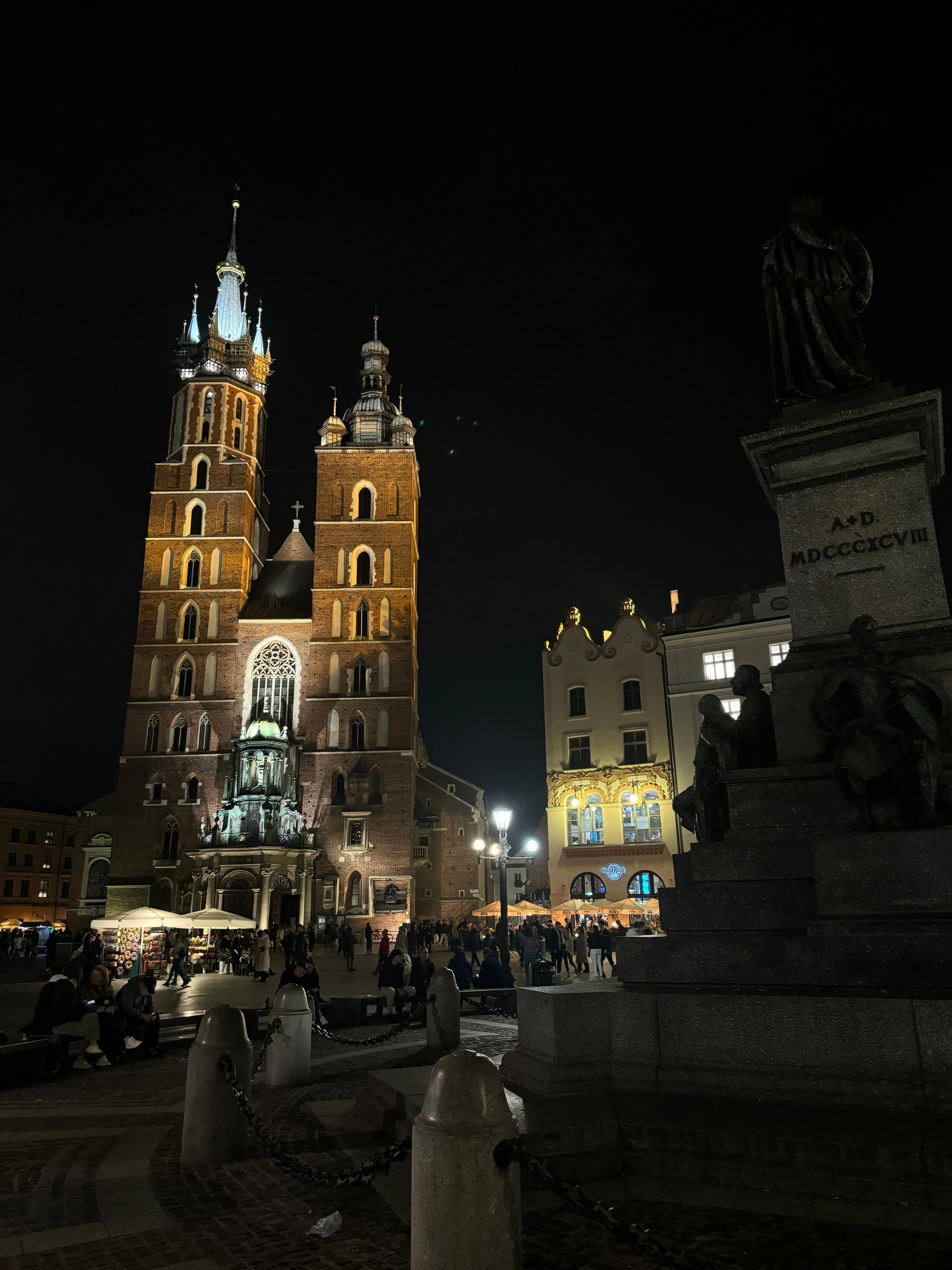
- From Baku to Kraków: A Cultural and Academic Adventure (by Fidan Azizli)
My name is Fidan Azizli, and I am a student in the “MA in International Relations: Europe from the Visegrad Perspective” programme. First and foremost, I would like to share that this is my first time in Europe. Despite having read and heard so much about European and, specifically, Polish culture, it was only through this programme that I had the privilege of experiencing it firsthand. As an Azerbaijani who has spent most of her life in Baku, accustomed to sun-filled days, I was in a new environment upon arriving in Poland. The cloudy skies and shorter, less sunny autumn and winter days initially posed a challenge. However, over time, I became accustomed to this change. Nonetheless, I found solace in the calmness of the weather compared to the strong winds back home, allowing me to enjoy the snowy days and the crisp air. Kraków, with its peaceful atmosphere, rich history, and serene vibe, has quickly become a place close to my heart. Every corner of this city tells a different historical tale, making it an ideal destination for those passionate about European history and culture.
While I experienced some cultural differences, I discovered many similarities between Polish culture and mine. For instance, family celebrations of important national holidays play an important part in Polish culture which is the same for Azerbaijan. Respect for the elderly is another similarity that bridges our cultures. Food is an important part of Polish culture. During my time in Poland, I had the pleasure of trying traditional Polish dishes such as “pierogi” and “zapiekanka.” “Pierogi”, a beloved Polish dish, comes with various fillings, the most famous of which is “ruskie pierogi”, filled with potatoes and cottage cheese. I particularly enjoyed the meat version “pierogi z mięsem”, and I highly recommend it.
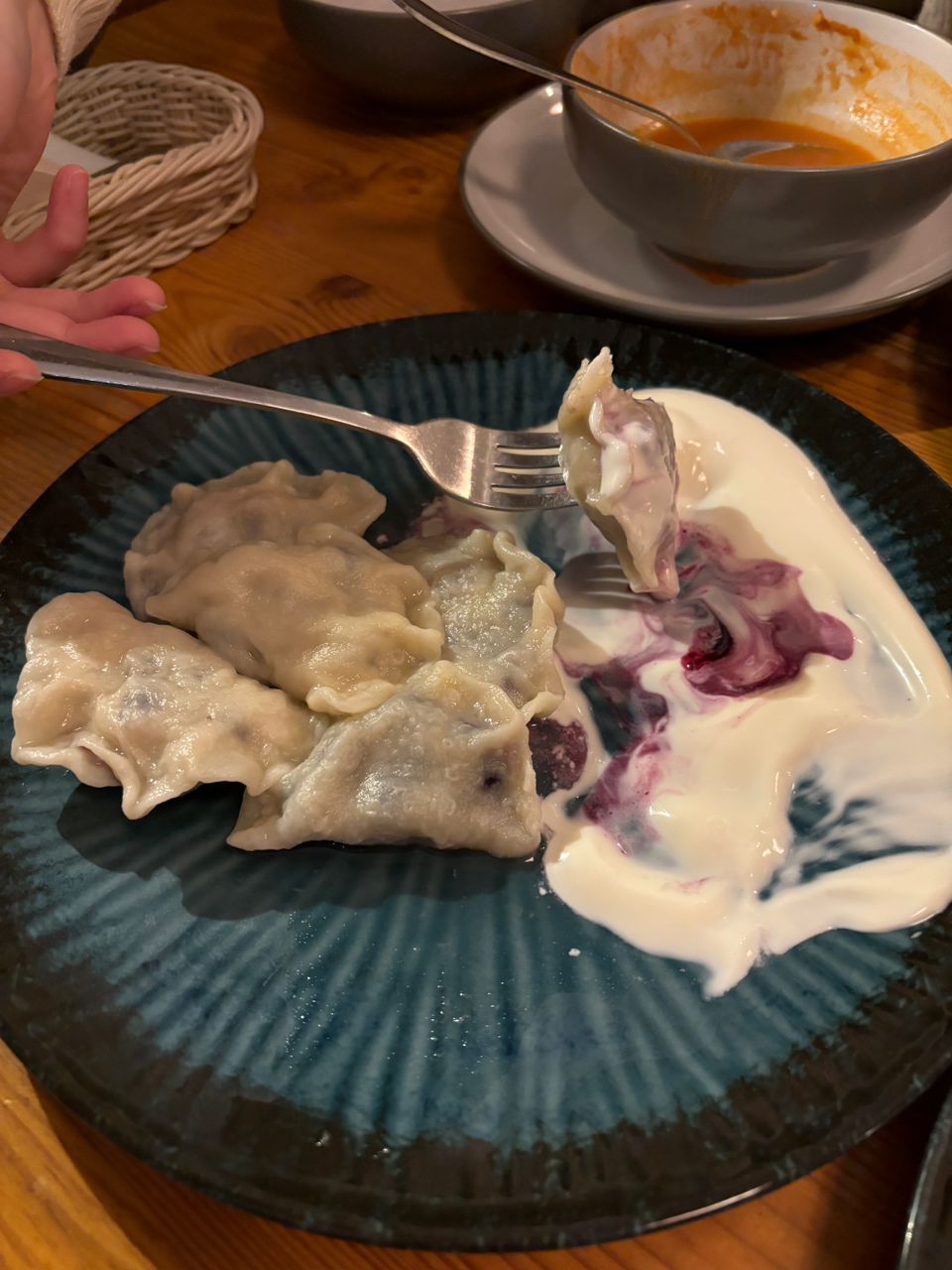
Zapiekanka is Polish fast food, often compared to pizza. It's made on a long slice of bread, topped with cheese, mushrooms, sauce, and sometimes meat, offering a light yet flavourful bite. You can easily find this food at local stores like Żabka, which is the name of the famous Polish supermarket chain. It is accessible all over Poland and open on Sunday while most grocery shopping stores are closed. During my stay, I faced some language barriers. While Kraków is a well-known tourist destination and most Polish youth and middle-aged population speak English, I advise learning some Polish phrases for daily life use. It will specifically help with communication with the older generation who, like in many countries, don’t speak much English. This could be a challenge while shopping or during a stay in the dormitory. I made sure to learn a few essential phrases I believe will be helpful for you, such as “dzień dobry” (good day), “dziękuję” (thank you), “tak”(yes), nie (no), “przepraszam” (I am sorry). Before the academic year, we were offered two-week free online Polish language lessons by the Institute of European Studies, which were incredibly helpful for navigating daily life. As for academic life, the exam system here is similar to my home country, with, generally, written exams. However, throughout the semester, you may have the opportunity to prepare a presentation or position paper instead. Some professors prefer academic papers to exams. What stands out is the approachability of the academic staff. When I struggled with my sleep schedule, my programme coordinators were incredibly supportive, and always ready to assist with any documentation or academic matters. Jagiellonian University frequently hosts academic conferences, and many opportunities for self-development, stimulating the intellectually enriching environment.
- Being International Students in Poland: Differing Cultures and Academic Life (By BinYan Hu (Aurora), Ruizhe Li (Jordan))